What makes this different from the 4-day route: The 4-day journey gives you one night in the dunes — enough to see the sunset, sleep under the stars, and have a sunrise. The 5-day version gives you two nights and one complete day with nothing to drive and nowhere to be. That day is the Sahara. Walking the dunes at midday, spending time in Rissani, sitting in silence outside the camp in the evening — this is why most travelers who have done both say the extra day is the most valuable one on the whole journey. Guide to choosing the right duration →
Most Morocco itineraries treat the Sahara as a destination you drive to, spend a night at, and drive back from. The desert becomes a box to check. The 5-day route is built around a different premise: that the most valuable day is not a driving day at all.
On Day 3, you wake in the dunes and have nowhere to go. The day is entirely open — walk the erg, visit Rissani's ancient market, find the edge of the palmery where the desert begins, sit outside the camp as the light shifts from afternoon to dusk. That is the Sahara as it actually is, not as a backdrop to a journey you're rushing through.
The route itself — Ait Ben Haddou, Dades, Todra — is the same as the 4-day. The difference is time, and time in the desert is the whole point.
If your time is limited to 4 days, the 4-Day Dades & Todra route is our recommended shorter version. If you want to start from Fes rather than Marrakech, see the Fes to Marrakech circuit.
Driving times are honest estimates based on road conditions, not GPS estimates. Day 3 has no driving — you stay in the dunes.
Day 1
Driving time: approximately 5–6 hours total including stops.
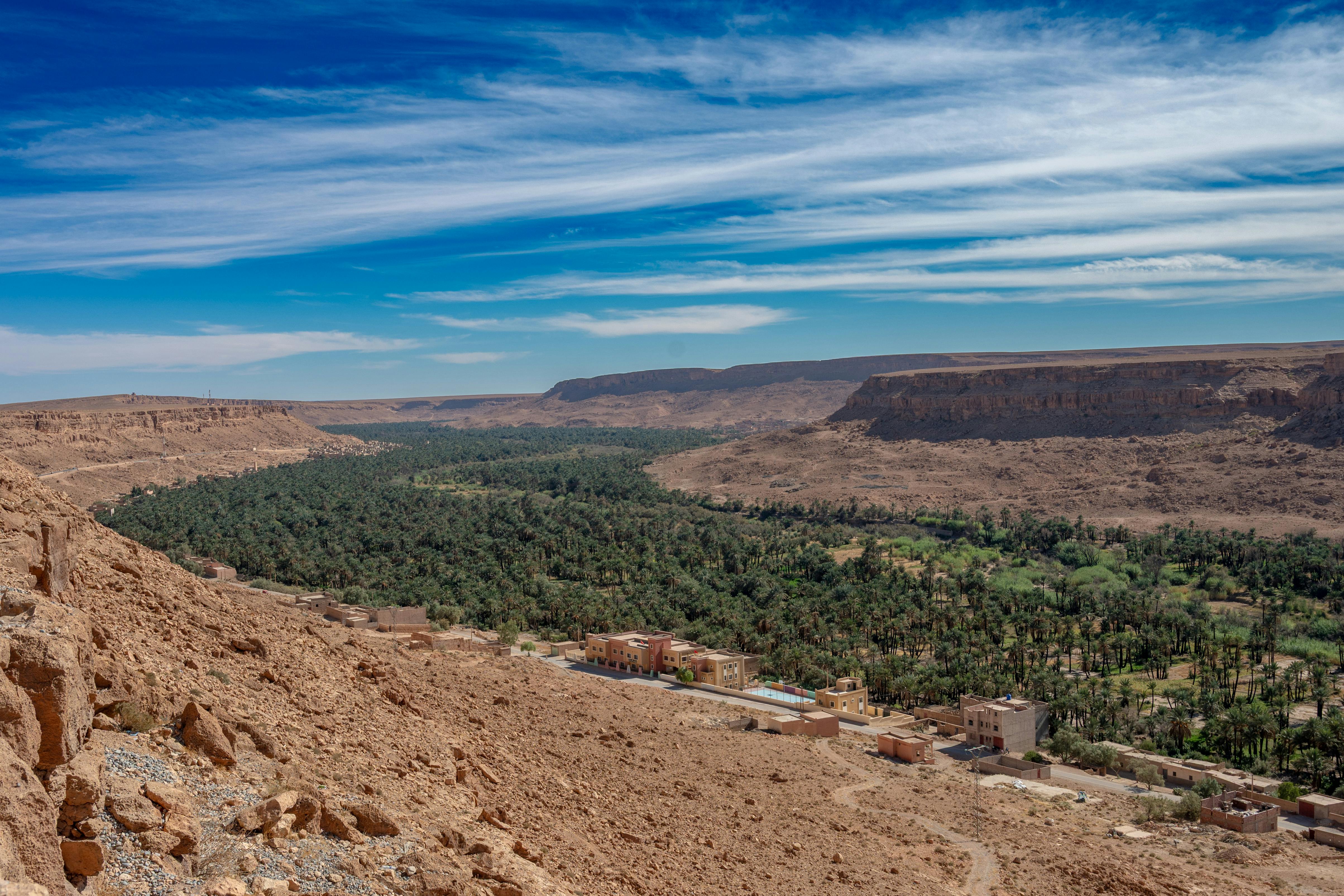
Morning departure from Marrakech south through the High Atlas via the Tizi n'Tichka pass — at 2,260m, the highest paved road in Morocco. The descent into the pre-Saharan south is dramatic. Stop at Ait Ben Haddou (UNESCO ksar, one of the best-preserved in Morocco) — allow 90 minutes minimum to walk up through the village properly. Continue through Ouarzazate and east along the kasbahs road. Arrive in the Dades Valley for the night. The gorge walls above the town are visible from the road long before you arrive.
Day 2
Driving time: approximately 5–6 hours total.
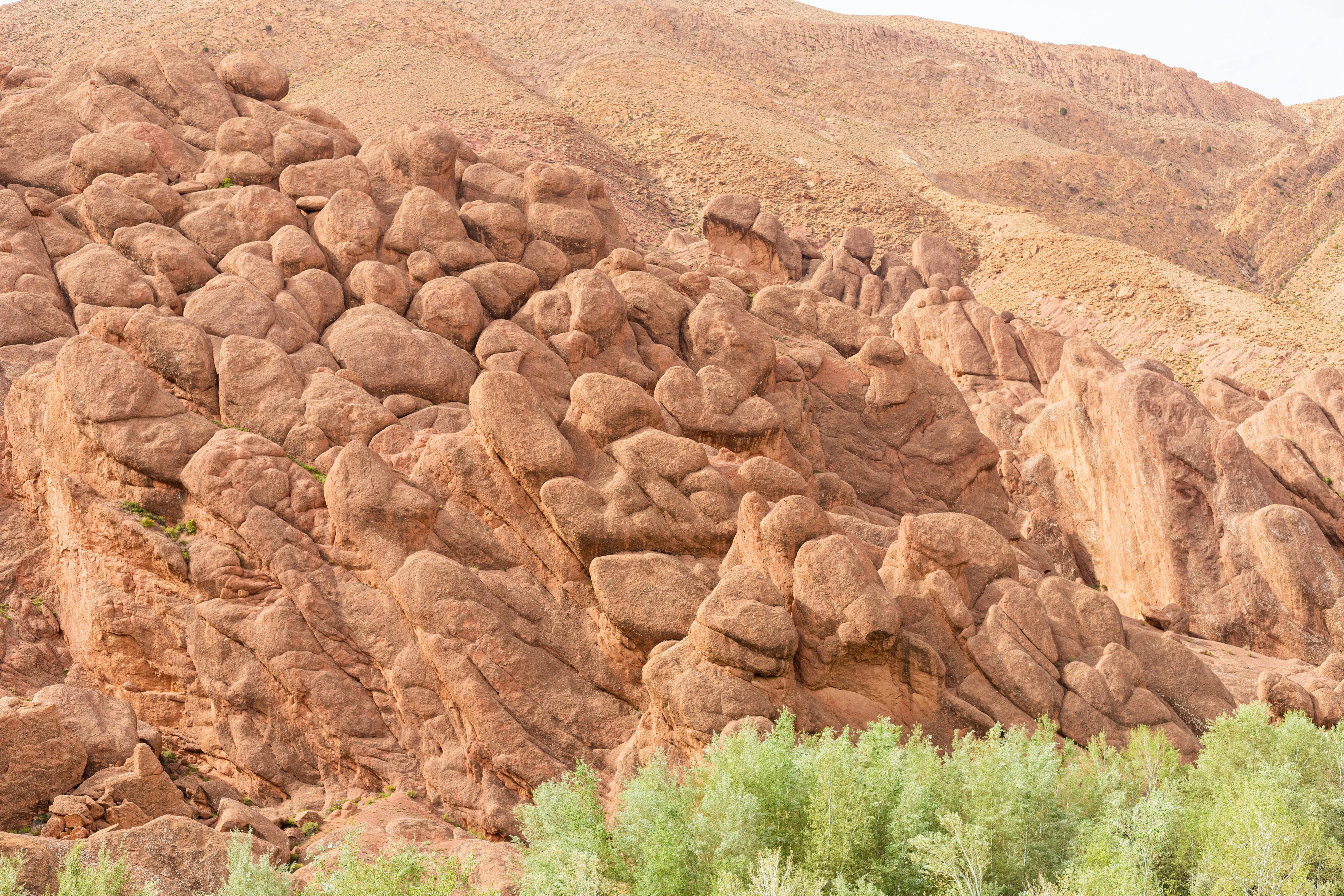
Morning in the Dades Gorge before departure — the winding canyon deserves a walk, not just a car stop. Drive east through the Skoura palm grove. Todra Gorge by midday — 300m limestone walls rising from a narrow river corridor. Take an hour here, longer if you want to walk. Continue south past Tinghir and Tinejdad. The desert begins to assert itself in the final approach to Merzouga. Arrive late afternoon. Sunset camel ride into the dunes of Erg Chebbi. Overnight at camp in the dunes — first of two nights.
Day 3
No driving. One full day in and around the Sahara.
Sunrise in the dunes — the best light of the entire journey. No schedule, no destination. The day belongs to the desert. Options: walk into the erg at your own pace (the dunes of Erg Chebbi are 22km long — you can go deep and find complete silence), visit the village of Khamlia (4km south of Merzouga — a small Gnawa music community, worth an hour), explore the seasonal Dayet Srji lake if water is present, or simply stay near camp and watch how the light changes through the day. In the afternoon, Rissani — the ancient capital of the Tafilalet and Taoufiq's home town, where the weekly souk has been running for centuries. The evening returns to the dunes. Second overnight at camp.
Day 4
Driving time: approximately 4–5 hours.
Second sunrise in the dunes at leisure. Depart mid-morning westward. The return leg can take a slightly different road — we sometimes vary the route through different villages in the Tafilalet. Overnight in the Dades or Todra area — a different guesthouse from Night 1, chosen based on your preferences and availability. The gorge country at night is very quiet.
Day 5
Driving time: approximately 5–6 hours with stops.
Return to Marrakech via the High Atlas. We can vary the return route depending on conditions and your preferences — back over Tizi n'Tichka, or via a different pass. Optional second visit to Ait Ben Haddou on the return if you want more time there, or a stop at a different kasbah village. Arrive Marrakech by evening — timing confirmed the morning of departure based on your plans for the city.
On the 5-day route, two of your four nights are spent at camp in Erg Chebbi. The quality of those two nights is where comfort level makes the most difference.
Clean family guesthouses along the route (Dades and return leg). Standard desert camp — shared facilities, basic tent, local food served at camp. Good value for first-time desert travelers who want the experience without inflated camp prices.
4 nights from approx. €160–€240 total (per group)
Mid-range guesthouses with en-suite rooms and reliable facilities on the road legs. Comfort camp in Erg Chebbi — private tent with proper beds, private bathroom, served dinner and breakfast. The most popular level on this route.
4 nights from approx. €290–€460 total (per group)
Selected boutique riads for the road nights. Best available camp at Erg Chebbi — private suite tent, private terrace, served meals, quieter dune location away from the main camp cluster. Full details confirmed at enquiry.
4 nights from approx. €540–€860 total (per group)
Per group, not per person. Your final quote depends on group size, comfort level, dates, and route. These ranges help you plan a realistic budget.
5-Day Standard
€1,050 – €1,280
2 travelers · guesthouses · standard camp (×2)
5-Day Comfort
€1,280 – €1,580
2 travelers · comfort riads · private camp tent (×2)
5-Day Premium
€1,700 – €2,200
2 travelers · boutique riads · best camp available (×2)
5-Day (Group of 4)
€760 – €1,050 per person
Group of 4 · comfort level · estimated per person
Final pricing is confirmed after we review your travel dates, group size, preferred comfort level, and accommodation preferences. See how pricing works for the full explanation.
We think the full free day in the desert is the single best upgrade on any Sahara itinerary. It is not about seeing more — the dunes are the same dunes. It is about having time that is not structured around getting somewhere. Most travelers who do both routes say Day 3 — the day with nowhere to be — is their strongest memory of Morocco. That said, the 4-day route is genuinely good. If time is limited, do the 4-day version. If you have the extra day, use it here.
More than most people expect. The Erg Chebbi dune field is 22km long — you can walk deep into it and find genuine silence and solitude. Khamlia, a village 4km south with a Gnawa music community, is worth an hour. The seasonal lake (Dayet Srji) is beautiful if water is present. Rissani, the ancient Tafilalet capital and Taoufiq's home town, has a weekly souk and the nearby ksar of Abbar. The palmery at the edge of the dunes is walkable. And there is genuine value in doing nothing — sitting outside camp in the afternoon heat, watching the light change. The day fills naturally.
Usually yes — it makes the most sense logistically and allows you to leave your bags at camp on Day 3 without any movement. If you specifically prefer two different camps (different locations in the dunes, different operators), we can arrange that — it adds a short camel or 4x4 transfer between them. Let us know when you enquire and we can discuss the options.
It depends heavily on the season. In January and February, desert nights can drop to near freezing or below — camp tents are not insulated to hotel standard, and you will need proper warm layers. In April, May, September, and October, nights are cool but comfortable (10–18°C typically). In summer (June–August), nights are warm but days can reach 45°C, which limits what you can do outside. We give specific packing advice for the season of your trip when you book.
Yes — this is a private journey, not a group tour. The route described here is the standard version that works best for most travelers. If you have specific interests (a particular village, a longer stop somewhere, an alternative return road), tell us when you enquire and we'll build it into the plan. The only constraint is realistic driving time — we won't promise a stop that doesn't leave enough time to enjoy it properly.
One night in the dunes. Our most recommended starting point for most travelers. From €790.
The complete south Morocco circuit — Ziz Valley, Rissani, Merzouga, and across to Marrakech. From €890.
Focused entirely on Erg Chebbi — more time in the dunes, less road. For travelers who want depth over breadth. From €1,200.